
A frameless glass panel loses its clean look the moment a bulky frame or drilled hole interrupts it. Glass spigots solve that problem. These stainless steel posts clamp the base of the panel, so the glass carries the design and the hardware stays out of the way. Glass fixtures of this type now anchor fencing, railings, canopies, and glass roofs on residential, commercial, and public projects. This post covers where glass spigots earn their place on site and what to check before you specify them.
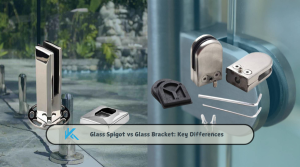
Unlike a bracket that grips glass at points along the face, a glass spigot holds the panel by its bottom edge and locks into the floor, slab, or fascia. A standard set includes a stainless steel body, a base plate, and an internal clamp with a rubber gasket that cushions the glass. Tighten the clamp with a spanner, and the panel stands without a frame. Spigots for glass come in two common grades: SS 304 for dry interiors and sheltered exteriors, and SS 316 for coastal, poolside, and wet locations.
Key Advantages of Glass Spigots on Site
Versatility
Four applications cover most jobs: fencing, railings, canopies, and glass roofs. One family of glass spigots serves all four, indoors and out. A project team can specify the same fitting on a balcony and a pool fence, then change only the size or finish. Glass spigots come in black, brushed, and polished finishes, so designers can match steel frames, timber decks, or stone facades without ordering custom parts. One line of glass spigots keeps a site looking consistent from one elevation to the next.
Strength and Durability
Grade selection decides how long a glass spigot lasts. SS 316 contains molybdenum, which resists pitting in salt air and chlorinated pool water. SS 304 suits dry interiors and sheltered terraces at a lower price. Glass spigots are manufactured in both grades, so buyers can match the metal to the exposure instead of overpaying on every job. Both grades tolerate wind, impact, and daily contact when the installer matches glass spigot size to glass thickness and span. Skip that check, and no grade of stainless steel can compensate.
Easy Installation
Skip the drilling. A glass spigot clamps the glass edge, so nobody cuts holes that could crack a toughened panel. An adjustable clamp adapts to different glass thicknesses, which means one fitting still works when the panel spec changes late in the project. Crews set the base, drop the panel in, level it, and tighten the clamp. Once the glass spigot locks, the glass needs no further attention, and the stainless steel body needs only a wipe with a damp cloth now and then. Glass fixtures that install this way also cut the risk of breakage on site.
Safety
In high winds, a glass barrier depends entirely on its base fixing. Glass spigots grip the lower edge and transfer the load into the slab or supporting structure, which keeps the panel in place. Corrosion weakens that grip over time. A rusted fixing loosens, and a loose fixing puts the panel at risk of shifting or falling out. Specify the correct grade of glass spigot, confirm the anchor bites into sound substrate, and inspect the fittings after storms. Those three checks take minutes and protect people standing beside the glass.
Aesthetics
Designer glass spigots turn hardware into part of the design. Slim glass spigot bodies keep the eye on the glass. Black glass spigots sharpen a modern facade, brushed finishes hide fingerprints at busy entrances, and polished finishes add a bright edge to hotel lobbies and villa balconies. Because the fixing sits at the base and not along the panel, the glass runs uninterrupted from floor to handrail or open edge. Glass spigots leave the panel as the only thing a visitor notices.
Conclusion
Glass spigots pack four strengths into one part: a clean look, corrosion-resistant stainless steel, drill-free installation, and a secure base fixing. Choose SS 316 for coastal and wet sites, SS 304 for dry interiors, and match the finish to the architecture. Glass fixtures built this way keep maintenance to an occasional wipe-down. Contact Kavi Fencing with your glass thickness and exposure to get a glass spigot recommendation.