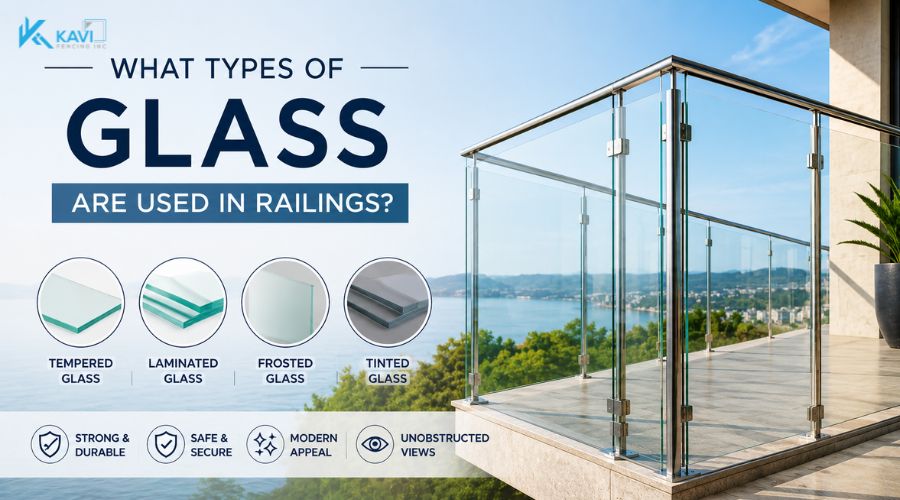
Glass railings have reshaped both residential and commercial architecture over the past two decades. They let natural light move freely through a space, create openness, and deliver a clean appearance that most other materials cannot replicate. Balconies, staircases, pool surrounds, and mezzanines all benefit. Choosing the right type of glass matters more than most buyers anticipate. Incorrect specification leads to cracked panels, failed inspections, and rapid visual deterioration. A qualified Glass Railing Manufacturer brings the technical knowledge needed to match glass type to location, load, and local safety codes, ensuring glass railings perform well for the lifetime of the building.
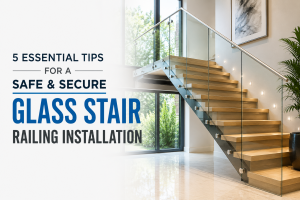
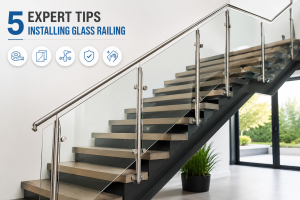
Understanding the Glass Railing Installation Process further sharpens these decisions. Panel thickness, standoff spacing, and substrate load capacity all connect to which glass belongs in a given project. A 10 mm toughened panel behaves differently under lateral load than a 13.5 mm laminated equivalent, and knowing that distinction before installation prevents expensive remedial work.
Why Glass Railings Are Popular in Modern Architecture
Glass suits new builds and refurbishments equally, sitting alongside concrete, timber, and steel without competing with any of them. A balcony glass railing removes the visual barrier entirely, preserving views that solid balustrades obstruct. Natural light travels further through the floor plan, reducing artificial lighting demand. Maintenance is minimal: glass does not rust, swell, or require repainting. Wiping railings every few weeks with a non-abrasive cleaner keeps them looking the same at year ten as at installation. For commercial projects, the reduced maintenance overhead is a meaningful lifecycle advantage.
Tempered Glass for Railings
Tempered glass undergoes a heat treatment process, reaching around 620 °C before rapid air quenching. That cycle compresses the outer surfaces, producing a panel roughly four times stronger than untreated glass of the same thickness. On impact, it fragments into small, blunt-edged pieces rather than sharp shards. Building codes in most markets require it as the minimum standard for balcony glass railing and staircase glass railing applications. Thickness options run from 8 mm for low-level interior use through 10 mm and 12 mm up to 15 mm for commercial installations, depending on panel span, post spacing, and wind loading.
Laminated Glass Railings
Laminated glass bonds two or more glass layers around a PVB or SentryGlas interlayer film. If either layer fractures, fragments adhere to the film rather than falling. That retained-glass behaviour makes laminated panels the preferred choice for overhead applications and balconies above the third floor. Sound insulation is a secondary benefit: a standard 6.4 mm unit reduces noise by approximately 35 dB, compared to around 28 dB for a single 6 mm toughened panel. Staircase glass railing installations in hotels and commercial interiors regularly specify laminated glass because it addresses both safety and acoustic performance.
Frosted and Tinted Glass for Privacy
Frosted glass is produced by sandblasting or acid etching to scatter light, but not transmit clear sightlines. It is suitable for urban balconies, railings on office partition walls, and staircases next to bathrooms. Tinted glass, available in bronze, grey, and blue-green, absorbs between 20 and 55 percent of solar radiation depending on composition, reducing glare and UV transmission on south-facing balconies. Both types come in custom finishes and can be toughened or laminated. Homeowners should choose privacy glass over clear when a railing faces a neighbouring property within 4 to 6 metres or when the adjacent interior requires consistent privacy without mechanical blinds.
Clear Glass Railings
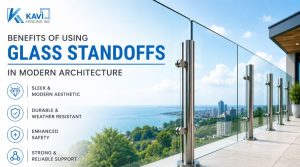
Clear toughened glass remains the most widely specified option for modern homes. Nothing else delivers the same combination of uninterrupted sightlines and visual lightness. Coastal balcony glass railing installations almost always default to clear glass because obscuring the view defeats its purpose. Paired with brushed stainless steel standoffs, clear panels produce the frameless floating quality that defines high-end residential design. Low-iron variants remove the faint green tint in standard clear glass, offering more accurate colour rendering. Full material details appear in the Properties, Uses And Composition of Balcony Glass Railings guide.
Glass Pool Railing Systems
Pool environments demand more from a railing specification than almost any other application. Chlorinated water, UV exposure, and constant moisture corrode inferior fittings within a few years. Glass pool railing systems pair toughened or laminated panels with marine-grade stainless steel or powder-coated aluminium hardware. The frameless arrangements use spigots or base channels to keep panels flush at ground level, without horizontal bars that trap debris. Barrier height compliance is required. Australian and New Zealand standards require a minimum of 1,200 mm, while most US and Canadian codes require between 900 mm and 1,200 mm.
Frameless vs Framed Glass Railings
Frameless systems fix glass with spigots or continuous base channels, removing visible posts and producing a quieter visual result. Framed systems use structural posts every 900 mm to 1,200 mm, allowing slightly thinner glass and typically costing 15 to 25 percent less than comparable frameless installations. Both types require regular cleaning and inspection. Framed systems offer structural redundancy for high-traffic commercial stairways. Frameless provides the uninterrupted, clean look most clients desire for residential balconies and pool surrounds.
How to Choose the Right Glass for Railings
Start with safety codes: most jurisdictions define minimum thickness, breakage performance, and panel height before any design consideration. Coastal sites add wind, salt, and UV demands. A 1,000 mm wide frameless panel needs at least 12 mm toughened glass; spans over 1,200 mm typically require 15 mm or a laminated equivalent. Residential and commercial load calculations differ. Budget and maintenance preferences factor in too. Advice from a professional Glass Railing Manufacturer with local code knowledge helps property owners select the right glass, fittings, and support systems before work begins.
Maintenance Tips for Glass Railings
- Clean panels regularly with mild soapy water.
A soft cloth and diluted dish soap remove dust and salt residue before they bond to the surface. A top-to-bottom squeegee pass avoids streaks.
- Avoid abrasive cleaners and bleach-based products.
Scouring pads and harsh chemicals scratch the glass surface microscopically, accelerating staining. pH-neutral glass cleaners or warm water handle routine maintenance safely.
- Inspect standoffs, brackets, and fittings every six months.
Check that caps remain tight and no panel has shifted. Corrosion at spigot bases near pools or coastal sites needs immediate attention.
- Address water stain buildup before it mineralises.
Diluted white vinegar left on glass for five minutes, then rinsed off, removes early-stage limescale. Use a calcium remover rated safe for toughened glass on stubborn deposits.
- Inspect the full railing after storms or heavy frost.
Check panel edges for micro-chips, which can propagate into cracks if ignored. Recheck sealant beads and drainage holes in base channels to prevent water pooling around fittings.
Kavi Fencing understands that the type of glass used is what makes the difference in how a railing performs over the entire service life, not just how it looks on the first day of installation. For most residential and commercial applications, tempered panels are appropriate, while laminated glass is best for overhead and high rise installations. Pool surrounds require marine-grade fittings alongside the right glass specification. When the correct materials are chosen from the start, your railing system can deliver lasting safety, strength, and visual appeal with nothing more than routine cleaning for decades.