Frameless glass railings require hardware that supports the glass panel securely without obstructing the view. Glass spigots and glass brackets fulfil this requirement, but their mounting methods, appearance, and suitability for different railing configurations vary. The choice depends on understanding how each option supports the glass, a factor worth confirming when evaluating options from a Glass Spigot supplier.
What Is a Glass Spigot?
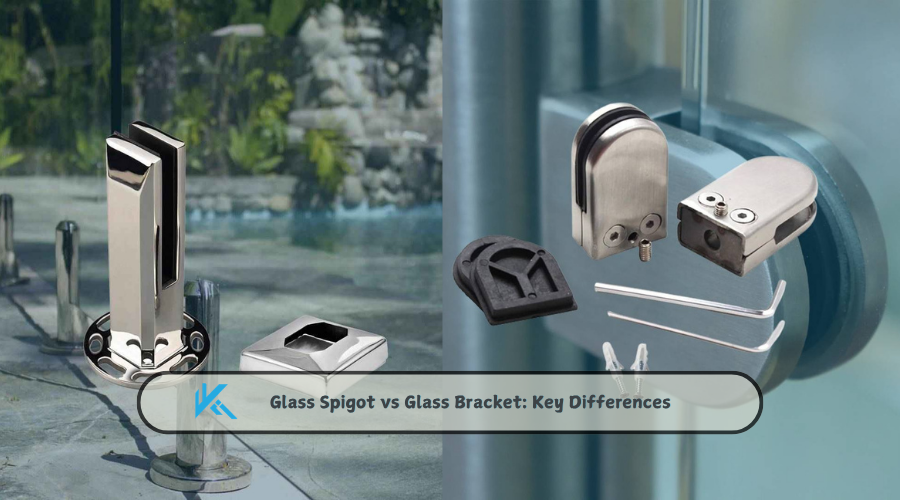
A glass spigot grips a glass panel from its base and holds it upright without a top rail or side frame. Spigots bolt into a floor, deck, or concrete slab, then clamp the glass without drilling through it. The absence of holes in the panel reduces installation time and the risk of cracking. Builders use spigots most often in glass pool fencing, balcony railings, staircase systems, terrace barriers, and frameless glass balustrades.
What Is a Glass Bracket?
A glass bracket secures a glass panel to a wall, post, floor, or structural surface using a compact fitting instead of a base-mounted post. It holds the glass from the side or top rather than gripping it at the bottom. Available in stainless steel or brass, in shapes like square, D-type, L-type, and corner, glass brackets fit glass from 6mm to 12mm thick. The fitting sits flush against the mounting surface, adding stability while keeping the hardware visually minimal.
Glass Spigot vs Glass Bracket: What Are the Key Differences?
Mounting Method: floor fixing for spigots, wall or structural fixing for brackets.
Glass Support: spigots grip the panel from below with no drilling, brackets hold it from the side or top.
Appearance: spigots stay low-profile for clear sightlines; brackets sit visible at the fixing point.
Installation: spigots need a solid floor or deck to anchor into; brackets need a stable wall, post, or frame.
Space and Layout: spigots suit open floor space; brackets suit tighter layouts.
Applications: spigots dominate pool fencing, balconies, and staircases; brackets suit partitions and wall-mounted railings.
Maintenance: spigots are easy to inspect at floor level; brackets need periodic checks on the wall or post fixing.
Floor space settles the choice first in most projects. A concrete deck with room for a base plate favours spigots. Limited clearance, or glass attaching directly to a wall, favours brackets instead.
When Should You Choose Glass Spigots?
For Frameless Pool Fencing
Spigots keep the panel uninterrupted from top to bottom, matching the clear visibility a poolside barrier requires.
For Balcony and Terrace Railings
Open-edge areas benefit from the clean line a base-mounted spigot delivers without a visible top rail.
For Staircase and Deck Systems
A solid floor or deck gives spigots the anchoring strength for the floating glass look common on modern staircases.
When Is a Glass Bracket More Suitable?
For Wall-Mounted Glass Systems
Brackets connect the panel straight to a wall or supporting surface, something a spigot cannot do alone.
For Restricted Floor Space
A bracket avoids the anchoring problem entirely by fixing to a vertical surface instead of the floor.
For Specific Architectural Designs
Some layouts require a mounting angle that only a bracket’s shape provides.
What Should You Consider Before Selecting the Hardware?
Ten factors shape the right choice: glass thickness, panel size, mounting surface, installation location, load capacity, indoor or outdoor exposure, hardware material and finish, safety requirements, overall design, and maintenance needs. Outdoor and poolside installations require 316-grade stainless steel over 304, since chloride exposure accelerates corrosion in the lower grade.
Why Quality Matters When Choosing a Glass Spigot or Bracket
Material quality decides how long either hardware type lasts. A spigot or bracket made from thin-walled steel bends under load and corrodes more quickly in humid environments. Verifying wall thickness, finish, and load ratings prior to purchase helps prevent premature failures, while understanding the benefits of using Glass spigots gives you a clearer picture of how high-grade glass hardware improves overall durability and weather resistance.
Conclusion
Both glass spigots and glass brackets give a frameless glass railing secure, visually clean support, but they get there differently. Spigots suit base-mounted systems with open floor space, while brackets suit wall or structural mounting where floor space is tight. Matching the hardware to the mounting surface, glass thickness, and exposure conditions determines how the installation performs over years, and a Glass Spigot supplier who understands both options can confirm which one suits your project.