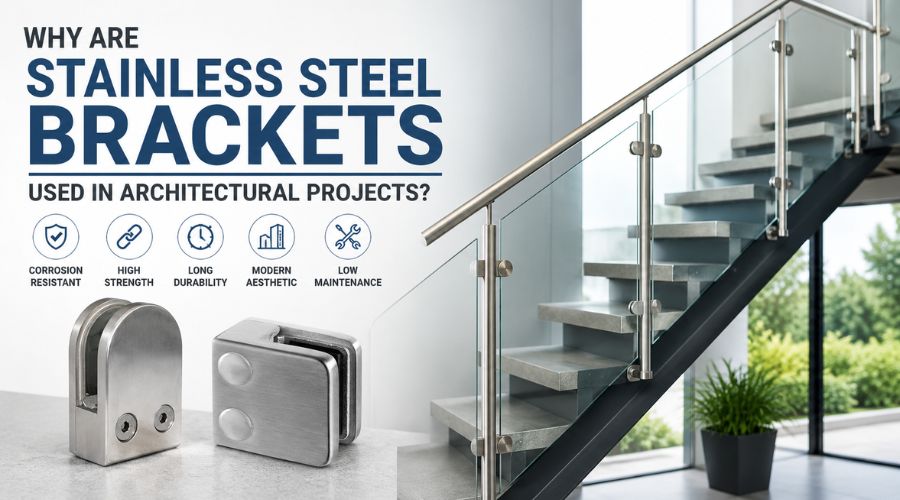
Modern buildings depend on hardware that most visitors never notice. Brackets hold glass panels, railings, and cladding in place year after year, often bearing loads that shift with wind, foot traffic, and temperature swings. Material selection determines whether that hardware lasts 5 or 50 years. Stainless steel brackets have become the standard choice across residential, commercial, and industrial projects because they combine strength with a finish that survives constant exposure to weather and handling.
What Are Stainless Steel Brackets?
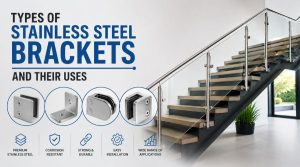
A bracket is a fixing component that joins two structural elements, such as a glass panel to a wall or a handrail to a post. Stainless steel support brackets are able to transfer load from one surface to another, while maintaining a rigid and precise connection. Brackets are available in L-shaped and U-shaped designs, round base plates and adjustable arms depending on whether they are for glass, timber or metal framing. Grade 304 stainless steel is adequate for most indoor applications and general outdoor use, but Grade 316 includes molybdenum for projects that will be exposed to coastal air or chemicals. Structural support brackets carry primary load in staircases and facades, whereas decorative variants focus on visible finish in display units and interior fittings such as Glass Shelf Brackets For Display Cases.
Why Do Architects Prefer Stainless Steel Brackets?
Architects specify architectural stainless steel brackets because the material performs under load without expanding the maintenance budget. Stainless steel resists tensile stress well above mild steel of the same thickness. It shrugs off rust. A chromium oxide layer forms on the surface and reseals itself when scratched, which keeps SS brackets functional in humid, coastal, and industrial environments where ordinary steel would corrode within a few years. Polished or brushed finishes give the hardware a premium look that fits both minimalist facades and traditional interiors. Cleaning usually needs nothing more than a damp cloth. That combination of strength, corrosion resistance, and low upkeep explains why the material now appears in glass balustrades, cladding systems, and handrails across both indoor lobbies and open-air terraces.
Where Are Steel Brackets Commonly Used?
- Glass railing installations
Brackets clamp toughened glass panels along balconies and stairwells without drilling through the glass surface.
- Staircase support systems
Structural brackets anchor stringers and treads, distributing footfall load evenly across each connection point.
- Wall-mounted shelves
Stainless steel wall brackets hold retail and residential shelving where a hidden or minimal fixing is required.
- Facade and cladding support
Brackets space panels away from the substrate, allowing ventilation and thermal movement behind the cladding layer.
- Balcony structures
Load-rated brackets secure balustrades and decking to the primary building frame in exposed conditions.
- Handrail systems
Wall and post-mounted brackets keep handrails at a fixed height while absorbing lateral pressure from users.
- Canopies
Cantilever brackets support entrance canopies without visible support columns beneath the roofline.
- Signage installations
Brackets project signage away from walls or facades, keeping mounting hardware discreet and weather resistant.
- Commercial interiors
Office partitions, glass doors, and display counters rely on brackets for a clean, fixed-in-place appearance.
- Residential architecture
Homeowners use brackets for staircases, garden railings, and mounted glass features around the property.
How Do SS Brackets Improve Structural Performance?
Heavy duty stainless steel brackets distribute the load over a much wider contact area than a simple screw or bolt fixing, reducing the stress concentration at any one point. This spread provides a stable mounting surface for repeated movement, such as a handrail flexing during daily use. Correctly sized stainless steel mounting brackets resist bending and deformation under sustained weight, so panels and railings stay aligned instead of drifting out of position over time. The material does not corrode or seize; therefore maintenance teams spend less time replacing fixings or freeing rusted bolts. This means fewer callbacks and a structure that performs consistently for decades, not just the first few years after installation, in the case of heavy-duty applications such as glass facades or multi-story balustrades.
Conclusion
Stainless steel brackets provide architects with a fixing solution that offers structural hold and a refined finish to the exposed parts of a building, with a range of finishes available. From decorative stainless steel brackets in display cases to heavy-duty units on multi-story facades, the material has no problem handling function and appearance with no compromises. Kavi Fencing manufactures and customizes Spigots, Railings, Standoffs and bracket solutions to meet your project specifications. Talk to Kavi Fencing about the correct bracket setup for your next build.