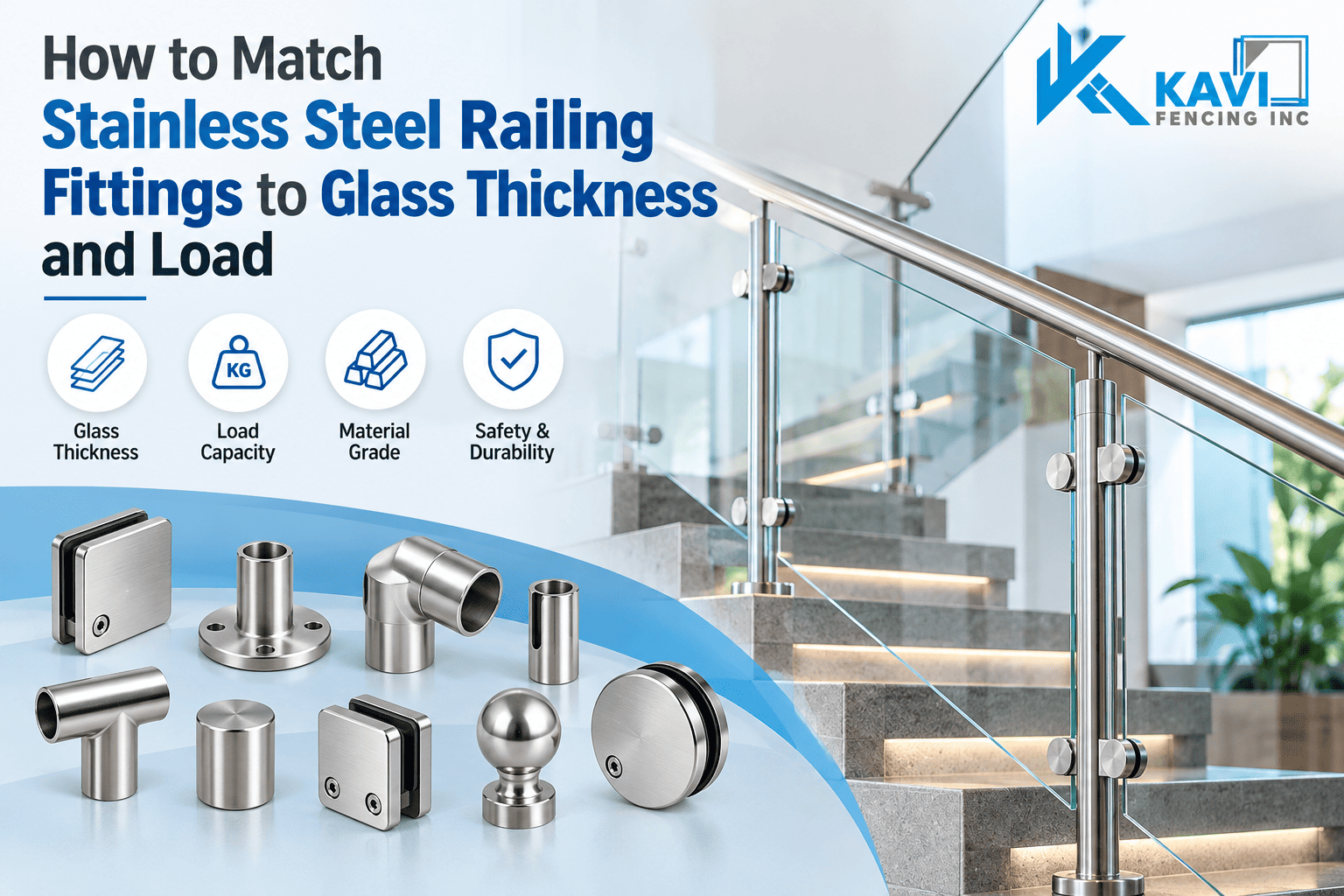
A glass railing holds up only as well as the hardware gripping it. When a 12 mm panel meets a spigot rated for 8 mm, the gap looks minor on paper and fails under a lean. Choosing the right stainless steel railing fittings keeps a glass balustrade safe, stable, and standing for decades. The match depends on four things working together: glass thickness, panel size, how the system mounts, and the loads it will carry over its life. Balconies, staircases, terraces, and commercial lobbies each push different forces through that hardware, so the fitting that suits a ground-floor partition rarely suits a windswept rooftop edge.
What Are Stainless Steel Railing Fittings?
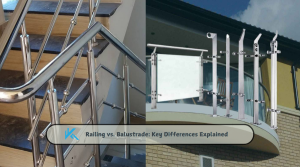
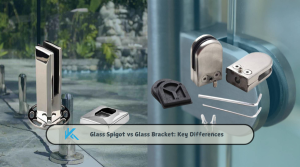
Glass railing systems rely on a handful of hardware types, each doing a distinct job. Glass spigots support panels from the base, anchoring into concrete or steel and holding the glass upright from below.
Glass standoffs fix panels at drilled points, transferring load through bolted connections.
Glass clamps grip panels against posts or framing, clamping the surface between two faces.
Handrail brackets join handrails to posts, walls, or the glass itself.
Base channels cradle the full bottom edge of a panel and run continuously along its length.
Every one of these carries its own glass compatibility and load rating, which is why specifying by look alone invites trouble.
How to Match Railing Fittings to Glass Thickness
Hardware has to be built for the exact glass it will hold. Confirm the thickness first, whether that is 10 mm, 12 mm, or a laminated build-up such as 11.52 mm or 13.52 mm. Check the manufacturer’s approved thickness window for the fitting and stay inside it. Clamps and spigots need the correct gaskets or rubber inserts so steel never touches glass directly, since metal-to-glass contact cracks panels under vibration and point stress.
Panel height, width, edge finish, and any drilled holes or cut-outs all feed into the choice too. A polished edge seats differently from a flat-ground one, and a drilled standoff hole must align precisely with the fitting it serves. Verify that the hardware suits toughened or laminated safety glass. One caution matters above the rest: a fitting that physically accepts a panel is not automatically rated to carry that panel’s structural loads.
How Load Requirements Affect Fitting Selection
Loads decide which fitting you pick and how closely you space them. Each type of force acts differently on the hardware.
- Horizontal loads: Forces people apply when they lean on or push against the railing, usually specified as a line load along the top edge.
- Point loads: Concentrated forces acting at a single spot, such as someone falling against one section.
- Wind loads: Critical for outdoor balconies, terraces, and elevated installations where gusts hit exposed glass.
- Panel dimensions: Taller and wider panels generate greater leverage on fittings and anchors, so a 1,100 mm balustrade stresses its base far harder than a 900 mm one.
- Fixing strength: Anchors and the concrete or steel behind them must transfer every load safely into the structure.
Fittings, glass, anchors, and the supporting structure behave as one system, and each link must hold. Required design loads vary with how the building gets used and which local codes apply, so a public commercial edge carries a stiffer load case than a private balcony.
Choosing the Right Fitting for Different Glass Railing Systems
The right pick comes from the full railing design. Two systems can share the same glass and still need entirely different fittings once anchorage, panel height, and exposure are considered. Use the table below as a starting reference, then confirm each choice against the project’s structural requirements before ordering.
| Fitting Type | Typical Application | Main Selection Factor |
| Glass Spigots | Frameless balconies, terraces, pool fencing | Glass compatibility, panel height, base anchorage |
| Glass Standoffs | Point-fixed glass railings and partitions | Glass thickness, hole details, fixing loads |
| Glass Clamps | Post-supported glass railings | Glass thickness, gasket fit, clamp capacity |
| Base Channels | Frameless glass balustrades | Glass build-up, channel strength, anchor layout |
| Handrail Brackets | Wall-mounted or post-mounted handrails | Handrail profile, support spacing, applied loads |
Stainless Steel Grade and Installation Considerations
Grade choice turns on where the railing lives. SS 304 suits most indoor and general-purpose settings, from interior staircases to covered commercial spaces. SS 316 earns its place near coastlines, pools, and anywhere chlorides attack the surface, because its added molybdenum resists pitting corrosion far better than 304. Pick the wrong grade for a salt-air balcony and you will watch rust bloom within a season.
Grade is only half the install. Match anchors to the base material, torque fixings to the specified figure, and align every spigot or post true before locking it down. Inspect the hardware on a regular schedule once it is in service. The surface underneath, whether concrete slab or steel frame, has to be sound enough for the design loads it now carries.
Conclusion
Safe glass railings come down to fittings matched to glass thickness, panel dimensions, load conditions, and the structure holding everything up. Treat those elements as one assembly, check the manufacturer’s specifications for every component, and get structural verification for the project before work begins. Explore the full range on Kavi Fencing’s stainless steel railing fittings page to spec the right hardware for your next installation.